
Be Methodical
Published: 2026-07-31
A few weeks ago my husband looked up from his computer at me and said “It wasn’t supposed to be this easy.”
We were looking at our long term financial projections together and discussing future scenarios. The “It” he was referring to was retiring at the ripe old age of 45.
Was it easy? Kinda yeah, but also kinda no. When you are saving for the future the steps are basic.
Step 1: Save and invest money every month
Step 2: There is no step two.
That’s essentially all you need to do, when you boil it all down to basics.
To save, you must spend less than you make every month. Give every dollar a job by having a spending category for Future money. Be intentional with how much you want to commit every month and do this before you set your spending categories for discretionary stuff, like entertainment or eating out. Your Future money is transferred every month automatically to your savings and investments, like a bill you pay yourself. The best investments, in my opinion, are passive and are a balanced portfolio in a set ratio of growth stuff and safe stuff that is built on global markets with low fees.
Then you just rinse and repeat for a few decades or so. That’s really all we did.
However, while the steps are simple, the execution is not easy. We live in a world that is designed to make spending (and overspending) too easy and wants to turn us all into dissatisfied customers. The key to my family’s success has been to build in simple but effective systems that counter mindless consumerism.
The Systems that we Built
We’re both very systems oriented. We both like doing something better, or more efficiently, or simpler. So we used that to our advantage when it came to money.
Here are some of our systems that made living below our means feel easy.
#1 Meal Planning
For decades, we have taken time together to plan our meals for the upcoming week. We write down what meals we want every day and, as we write down the meal, we list out the ingredients we need to buy with a running tally of what each will cost. And, since we’re both computer nerds, I have spreadsheets back to January 1st 2010 to prove it. Go ahead and ask me what I had for dinner at any point between then and now. I likely can tell you, along with how much it cost to make!
Some of the benefits of meal planning include
- The cost of our weekly meals stay within our weekly food budget.
- Being intentional and agreeing on when to eat out; We like cooking at home together, so eating out or ordering in food is generally reserved for special occasions. What we make tastes better anyway!
- We plan to eat our leftovers and very, very, rarely throw away food.
- We work the current week’s sales into our plan and use that to guide what meals we will make.
- If you are feeling too busy or too lazy, you can copy last week’s meal plan and just tweak as needed. (or see what you ate two years ago and copy/paste that into this week)
- We plan our food around life events. We note down significant events in our weekly food plan so that we are planning food that is convenient based on time constraints and our location
- We spend time together making our food and sit together to eat it. This adds a lot of joy to our lives!
- We can meal prep for the week, if we want to. It’s sometimes easier to make a big batch of food on the weekend and portion it out for meals over the week.
#2 Planned Spending
We’ve operated from a spending plan (a.k.a budget) since we moved into our first apartment together. But a budget is not a system. The system is how we use our spending plan to make decisions together.
- Build a budget that you can live on based on your income and expenses and commit to it.
- Live life, spending money as planned.
- When you get a raise, review the spending plan together and decide if you will save/invest more to reach your goals faster or allocate the money to specific budget line or a mix of those two choices.
- When you want to make a life change, like finance a car or buy a house or move somewhere new, make a copy of your spending plan and plunk in the new numbers. Does the budget balance without sacrificing your saving and investing goals?
#3 Where is it going to live?
One of our house rules is that we won’t acquire stuff unless we already know where it’s going to be stored in our home. Sometimes that means we need to reduce other items to make room for new to us things. Sometimes it means we choose to not acquire the thing.
Our system is to set our intention to not own too many things, and then we check in with each other before making a purchase.
#4 Evaluating Joy
How much time working was required to afford the item you want? For example, how many hours of work did it take to afford eating at that restaurant? Did you enjoy it? Was it worth it?
Our system is to set our intention to appreciate our discretionary spending. We talk about money choices on a monthly basis and decide if there are spending habits we want to focus on or let go.
We don’t buy coffee, except on a road trips. We like the stuff we make at home, it doesn’t produce disposable waste, and it costs a fraction of buying from a shop.
When we were first married, I loved the idea of fresh flowers. They seemed like a luxury, and for a young couple living below to poverty line, they were! But over time, I found they were not bringing me joy in the same way anymore. I didn’t want flowers that lasted a week and then died. I preferred potted plants, which last longer and are less expensive over time.
We evaluate joy on the big stuff too. At one point, we considered buying a camp (a.k.a. cottage). But maintaining a second property would have been drudgery and would have required a significant chunk of our take home pay (which translated to time we would have had to commit to working). Through that lens, we knew renting a camp on occasion would bring us more joy than owning one.
#5 Fill up life with Free First
There are so many cool things to fill up your time with! If you want to spend less, so that you can save more, lean into filling up your calendar with free (or very low cost) stuff first. The “system” here is to be intentional; make a list of activities that you are looking forward to for the next season and then block in time in your calendar to do some of them. You may find that you are so busy with free/low cost activities that you really have to find time for any expensive excursions.
- Play cards
- Go to the library, Read books
- Practice yoga by following free YouTube videos
- Go on a hike with friends
- Take your kids and/or pets to the park
- Wander around your downtown
- Go to street fairs and festivals in your town
- Swim at a public beach
- Have a friend over for tea
- Host a table top game night
- Play free online games with friends
- Play D&D with friends
- Practice playing music or singing
- Draw or paint
- Go to an art gallery or a museum
- Learn a new language with a free app
===
These are some of my systems that let me live more intentionally. What systems do you have?
If you enjoyed this post, please subscribe to the weekly MWM email.
Investing ABCs: Investment Accounts
Published: 2026-07-24
This Investing ABCs series is for anyone who wants to start investing, but doesn’t know the first thing about how to begin. You don’t need to read this series in order, but you should read and learn all the ABCs before venturing forth to buy investment products.
As I mentioned in my post You Can Manage Your Own Investments, if you can shop online, you have all the proficiency you need to open and use an account for investing. If you are totally new to investing, this primer is here to help you understand what a brokerage account is, what an investment account is, and a few of the most common types of investment accounts that you can open.
Brokerage Accounts
People who want to manage their own investments need a brokerage account.
There are many institutions that offer brokerage services where you can open an account. You might choose from online only providers like Questrade or Wealthsimple or one of the Canadian big 5 banks: Royal Bank of Canada (RBC), Toronto-Dominion Bank (TD), Bank of Montreal (BMO), Canadian Imperial Bank of Commerce (CIBC), and The Bank of Nova Scotia (Scotiabank).
A brokerage account is an account that you open with a provider. Once you have your brokerage account, you open one or more different types of investment accounts inside your brokerage account.
Let’s compare this to bank accounts, which you may have had since you were a kid. When you want a savings account, you open a personal banking account with the bank and they add a savings account to your personal banking account. A savings account is simple; it only holds cash.
When you want an investment account, you open a brokerage account with a provider (a.k.a a broker, which might be a bank) and request that they add an investment account to your brokerage account. Investment accounts are structured a little differently from a chequing or savings account. An investment account includes a cash portion plus your investment holdings. Inside your investment account you buy investment products. Investment accounts come in different types. You might recognize their acronyms: RRSP, TFSA, FHSA, RESP, LiRA, etc.
Here is a visual representation of what holding different accounts looks like. In the example, “Heather McNeil” has some of the most common types of accounts with TD Bank: a savings account, a spending account, a TFSA, and an RRSP. Notice that the investment accounts include cash and the investment holdings that Heather has purchased.
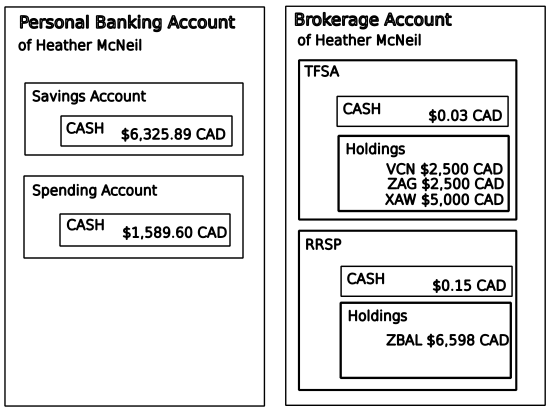
Deep Dive Note: When opening an investment account, you must specify which type you want. You cannot change the type of investment account after you’ve requested it, just like you cannot change your savings account into a chequing account. You would need to open the new chequing account, transfer your funds, and then close the savings account. Different types of investment accounts exist because each one has different tax advantage and rules for their contribution limits. You cannot turn a TFSA into an RRSP, but you might have a strategy to migrate money overtime from one to another. You can hold the same holdings inside your investment accounts. For example, you can own ZBAL inside your TFSA, RRSP, and FHSA.
Just like a bank account, you can have brokerage accounts at as many institutions as you like. If you don’t like the service you are getting at one provider, you can take your business to another provider. Just be prepared to pay admin fees when you leave.
Important: Brokerage fees vary across providers. Before opening a brokerage account, read the provider’s website to understand if they charge a flat fee per trade and if it’s a set amount when you buy products or if they have a percentage based fee when you sell products. You should also know if there is a minimum balance at which they reduce or waive certain fees.
My experience working with traditional banks is that they are still fairly paper driven, move slow, are prone to administrative hiccups, and you will have to call them to get support. The experience may not be smooth or user friendly. We used TD as our brokerage for most of our adult life. We switched to Wealthsimple a year ago and have found the user experience to be head and shoulders above working with a bank. Wealthsimple even paid for the admin fees TD charge to migrate our investment accounts.
Investment Accounts
There are two main categories of investment accounts. They are either a registered account or a non registered account. A registered account gives you a tax advantage while a non registered account does not. The type of tax advantage a registered account gives you is based on it’s type. Common registered account types are FHSA, TFSA or RRSP.
Regardless of the category and type of investment accounts, once you’ve opened your investment account, they all operate the same in relation to purchasing and selling investment products. They all include a cash portion and your holdings.
A non registered account will not provide you any tax refund today or any direct tax break in the future. In a non registered account, you purchase investments with money that you’ve already paid income taxes against. When you want to cash out your non registered investments, the growth (a.k.a capital gains) is reported as income on your income taxes. If you lose money when sell your investments, you report the loss on your income taxes. A loss reduces your taxable income.
Registered accounts (a.k.a tax advantaged investment accounts) have the same structure as your standard investment account. They have a cash component which you use to buy your investment products (a.k.a holdings). Registered accounts give you special advantages, either by reducing your taxable income now or by eliminating income taxes on future gains. All registered investment accounts are subject to tracking by the CRA for tax purposes; the brokerage is responsible for submitting reports about your contributions to the CRA.
Two of the biggest hurdles to getting started with investing is
1) knowing which type of registered account to invest in first and
2) deciding which investment products to buy.
Investment Account Types
| Account Type | Description | Requirements | Pros | Cons | How To Use |
|---|---|---|---|---|---|
| Non Registered Account | Contributions are after income tax dollars. You do not get a tax break | You must have a valid social insurance number (SIN) You must be 18 years of age or older. | You can invest your money in investment products. | No special tax advantages or tax refunds. | If you max out your contribution room on your tax-advantaged account types, your extra money must be invested through a non-registered account. |
| TFSA | Tax Free Savings Account Registered,Tax Advantaged Account Contributions are after income tax dollars. You do not get a tax break today, however growth within this account and all money withdrawn is never subject to income tax. | You must have a valid social insurance number (SIN) You must be 18 years of age or older You must only contribute up to your maximum contribution limit | Tax-Free growth and withdrawals forever Flexible for many goals due to a wide range of investment options Withdrawals create new contribution room in the following calendar year No max age Withdrawals don’t affect government benefits Annual contribution room carries forward No income requirement to contribute Estate Planning Benefits: If you designate your spouse as a “successor holder,” the TFSA can seamlessly transfer to them upon your death, maintaining its tax-free status. | Contributions are not tax-deductible Steer clear of over-contribution penalties There is no tax write off if you incur investment losses Be aware that foreign investments can be subject to withholding taxes from the foreign nation Your account is not protected from creditors (in most cases) It can be misused as a “Savings Account” only Potential for “Business Income” Scrutiny by the CRA if you trade inside it a lot (day trading) Possible to introduce complexity with multiple accounts across multiple institutions | A great fund for holding high growth investments (equity). If you believe your earning potential will significantly increase in future years or you are in a low tax bracket, focus on TFSA before RRSPs |
| RRSP | Registered Retirement Savings Plan Registered,Tax Advantaged Account Designed to help individuals save for retirement while offering significant tax advantages The underlying premise of an RRSP is that you contribute when you are in a higher tax bracket (during your working years) and withdraw when you are in a lower tax bracket (in retirement, when your income is typically lower). This can result in paying less overall tax on your savings. | You must be a resident of Canada You need a valid Social Insurance Number. You must have “earned income” to generate RRSP contribution room You must file a tax return Minimum Age: There is no minimum age to open an RRSP, as long as you have earned income and file a tax return. However, some financial institutions might have their own age of majority requirements to open certain investment accounts. Maximum Age: You can contribute to your RRSP up until December 31 of the year you turn 71. After this date, you can no longer contribute to your own RRSP, and you must convert it into a Registered Retirement Income Fund (RRIF), purchase an annuity, or withdraw the funds (which would be fully taxable) | Every dollar you contribute reduces your taxable income for the yearInvestments within your RRSP grow tax-free. You don’t pay any tax on the interest, dividends, or capital gains earned inside the plan until you withdraw the money.Potential for Lower Lifetime Tax RateSpousal RRSP OpportunitiesGenerally, funds held within an RRSP are protected from creditors in the event of bankruptcyHome Buyers’ Plan (HBP) allow you to withdraw up to $60,000 (as of 2024) from your RRSP to use as a down payment for a first home, tax-free, provided you repay the amount within 15 yearsLifelong Learning Plan (LLP): You can withdraw up to $10,000 per year, to a maximum of $20,000, to finance eligible full-time education or training for yourself or your spouse/common-law partner, tax-free, provided you repay the amount within 10 years.Contribution Room Carries Forward: If you don’t use all your available RRSP contribution room in a given year, it carries forward indefinitely, allowing you to catch up on contributions in future years. | All withdrawals from an RRSP (except for those under the HBP or LLP, which require repayment) are considered fully taxable income in the year they are withdrawn. This is the “tax deferral” part of the equation.Impact on Income-Tested Benefits: Withdrawals from an RRSP (and later, a RRIF) are considered income and can reduce your eligibility for income-tested government benefits in retirement, such as Old Age Security (OAS) and Guaranteed Income Supplement (GIS). This is a significant concern for lower-income retireesMandatory Conversion and Minimum Withdrawals: By December 31 of the year you turn 71, your RRSP must be converted into a Registered Retirement Income Fund (RRIF) or used to purchase an annuity. Once converted to a RRIF, you are required to withdraw a minimum amount each year, which is taxable, regardless of whether you need the income or not. These minimum withdrawal rates increase with age.Lost Contribution Room on Withdrawal: Unlike a TFSA, if you make a withdrawal from your RRSP (outside of the HBP or LLP), that contribution room is lost forever and does not get re-added in future years.Withholding Tax on Withdrawals: When you withdraw funds from an RRSP before it’s converted to a RRIF (and even from a RRIF beyond the minimum withdrawal), a withholding tax is applied at the time of withdrawal. While this is a pre-payment of taxes, it means you don’t get the full amount upfront.Less Flexible for Short-Term Goals: Because withdrawals are taxable and result in lost contribution room, RRSPs are generally not ideal for short-term savings goals where you might need access to your money before retirement.Tax Refund Management: While the tax deduction is a pro, if you don’t reinvest your tax refund back into your RRSP (or another savings vehicle), you are effectively losing out on some of the long-term benefits of the plan. Spending the refund diminishes the overall tax efficiency. | A great fund for long term retirement savings and for reducing your total income tax over your lifetime If you are focusing on equity investments in your TFSA to maximize growth, consider keeping stable investments, like bonds, in your RRSP If you believe you’re at the height of your earning potential and can use an RRSP to lower your tax bracket, prioritize RRSP contributions. Have the self discipline to always invest the annual tax refund. |
| RESP | Registered Education Savings Plan Registered,Tax Advantaged Account Designed to allow adults to save for the education of minors. | You and the minor must each have a valid social insurance number (SIN) You must be 18 years of age or older. | The Canadian government adds grants on top of money you’ve contributed annually. | Funds may only be used to pay for eligible education expense. If the beneficiary does not pursue post-secondary education, there may be limitations on accessing the funds. | A great way to grow money over time to help someone else pursue post secondary education. |
Investment Products
Investment products, referred to as your holdings, is the stuff that you buy inside your investment account. Ideally, it’s the stuff that pays you dividends and grows in value over time. Examples of investment products are ETFs (Exchange Traded Funds), Stocks, Bonds, Mutual Funds, and GICs (Government Income Certificates).
We will take a closer look at investment products in a future post. In the meantime, let me know where you are on the path to managing your investments. Do you already own investment accounts? Are they self-directed or managed by a provider? If you have investment accounts, do you know what you are holding in them?
If you enjoyed this post, please subscribe to the weekly MWM email.
Keeping It Real
Published: 2026-07-17
My hopes and dreams for this blog is that it will help you win the money game. It’s a way for me to document any wisdom that I’ve learned from those who’ve gone before me so that I may share it with the people coming after me. While writing, I have specific people in mind that I am writing to, like my kids, my nieces and nephews, my friends, and my grandkids.
I have a personal goal to publish 1 to 2 posts a week. I am very goal orientated (shocking, I know) and weekly posts keep me creating. I’ve been really enjoying the blog format; it focuses me on one topic at a time for a few hundred words and gives me a small sense of accomplishment. Each published post feels like a small step further on the path I’m marking for you. However, some posts are me simply sharing a bit of news or something that’s on my mind. They help break up the serious stuff, which might become too dry if it was the only thing I wrote about.
The challenge is that having an seemingly endless stream of posts becomes overwhelming. My goal with this blog is definitely not to drown you in endless content.
And so, I’ve created a new page for Essential Posts as a link library of each series that deep dives into the most important topics for building wealth.
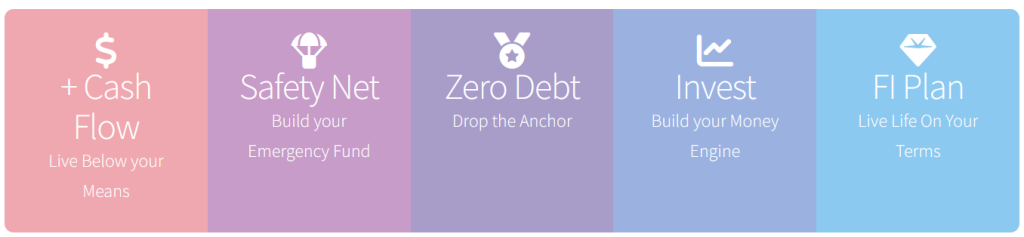
You can still read all my posts in chronological order here. And I really hope that you subscribe to my mailing list, join me on this journey, and keep up with my weekly posts.
But, for simplicity and clarity, you now have my Essential Posts page. It cuts through the noise of endless content and highlights the key information that you need to take control of your money. I hope you like the format and it makes learning and reviewing concepts easier to digest.
Enjoy!
If you enjoyed this post, please subscribe to the weekly MWM email.
We’ve Started a Generosity Budget
Published: 2026-07-10
Budgeting is kinda like working out.
At first it sucks. A lot.
It takes time to build your money muscles.
But if you can keep showing up and putting in the work, eventually, you start to see the gains. And, eventually, you might even kinda, sorta, start to like it.
Starting a budget from scratch is work. Sticking to it is discipline. Fine tuning it is dedication.
Building your money muscles is important. You will depend on them to do the heavy lifting when it’s time to make life choices. From spending to saving to investing, these habits should be cultivated with care and intention.
But you can go to far. Like a body building who can barely turn their head anymore, you can over develop muscles and loose flexibility.
My husband and I may be at risk of over development. We’ve lived and thrived by assigning every dollar a job. We’ve fine tuned and adjusted out spending plan thoughtfully for decades. Generally it’s served us well. We discuss and negotiate changes to our spending plan at our monthly money meeting. We don’t impulse buy. We have mine and yours money. It’s structured. It’s simple. It’s a well oiled machine.
But it’s also a bit rigid. In our early marriage, we were focused on busting our debt. Then we started to focus on building our nest egg. We picked a lifestyle we were comfortable with and that kept our cost of living in line with our values and our goal to retire early.
The thing is, when you give every dollar a job and you want to retire early, you get pretty good at living without. We chose to be a one vehicle family. We chose to limit our holiday spending. If our clothing budget was maxed out, we chose to wait until there was room in the budget again to buy more stuff.
Living this way spills over to social life. We were generous with our time. We’ve always said yes to helping friends and family move. We’ve pitched in on home renos. We’ve helped dig garden beds and erect retaining walls. But we wouldn’t, as a general rule, be dropping by with a Timmies for everyone.
We found ways to work social spending into our budget. We hosted an annual boxing day house party. It was an all day open house and we offered food and drinks, inviting all our friends over to play cards and tabletop games. At our 25th anniversary, we rented out the back of a pool hall, flew our daughter and her partner in, and hosted a pool tournament, covering everyone’s drink and food for the night. We love that style of generosity.
But smaller acts of generosity, until recently, did not have a place in our budget. The only bucket we had, was Miscellaneous Spending, which is our catch all money for everything from hand cream to rechargeable batteries. This meant we rarely spent money on small acts of kindness, mostly because it just wasn’t something that we thought about intentionally. Our money muscles were too puffed and our wallets just were not flexible in that way.
It’s been on my mind recently. I want to be less transactional and feel freer to perform small acts of kindness. I believe your planned spending is a reflection of your values. Value cars? Your budget will illustrate that. Value clothes? Your budget will prove it. Value eating out? You budget will show that too.
I want to be someone who can fund small acts of kindness and I want my budget to show it.
So, last month, I proposed that we add a Generosity line to our planned spending budget. We agreed to have a modest amount available to allow us to be generous in a spontaneous way. It’s early days, but we’ve both already dipped into our generosity fund on separate occasions, which was great. However, we didn’t spend it to zero, indicating that we have room to stretch ourselves more. We need to build up that money muscle.
We will continue to work at it, and I will keep you posted.
How does generosity show up in your life?
If you enjoyed this post, please subscribe to the weekly MWM email.
Investing ABCs: Growth Part 2 – But wait, there’s more!
Published: 2026-07-03
This is my third post in my foundational knowledge series for investing. This series is for anyone who wants to start investing, but doesn’t know the first thing about how to begin. You don’t need to read this series in order, but you should read and learn all the ABCs before venturing forth to buy investment products.
When you step into the world of investing, there is a fun perk that you can’t get anywhere else. That perk is called a dividend.
A dividend is a portion of a company’s profit paid out to its shareholders. Determined by the board of directors, they act as a reward for investing and are typically distributed on a regular schedule (e.g., quarterly or annually) in the form of cash (or additional stock). The promise of dividend payouts entices investors to buy and hold shares in the company.
I am always delighted by dividend payments. They are little bonus injections of cash that feel like bonus money. After switching to Wealthsimple almost a year ago, I receive email notifications each time I get a payout. Seeing those happy little notices appear in my inbox still hasn’t gotten old.
In reality though, these payments are not a surprise at all. I already know an estimated amount I should expect and the frequency in which they should arrive. But if you don’t get joy from the little things in life, than what’s the point of even living? Right?
Take a look at the ETF funds that we invest in, as an example. I’ll break down why we settled on these funds in a future post. For now, we’re going to look at their Dividend yield (payouts). The Annual Dividend Rate is how much you should expect your dividend payout to be, per share you own, over the year. Most funds pay out dividends more frequently than annually, so the annual amount gets portioned out over the course of the year. How often is the Frequency, which is also how often I get those fun emails from Wealthsimple ringing my “I just got paid” bell.
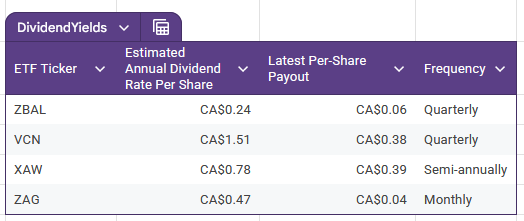
You can take this information and calculate the dividend payout, based on how many shares you own. Let’s assume we own 1000 shares of VCN.
1,000 shares of VCN x $1.51 CAD/share = $1,510 CAD annually, paid $380 quarterly
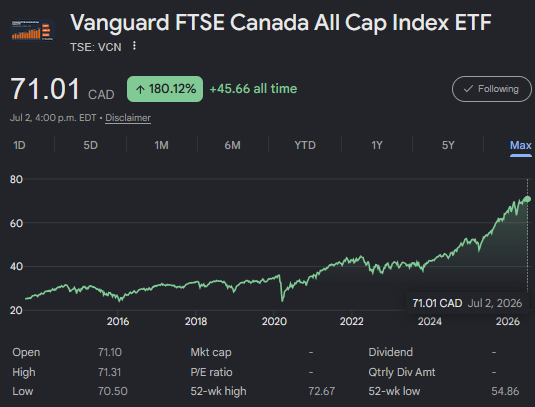
Note that dividends are above and beyond the growth I described in my last post Investing ABCs: Growth. Let’s look at the growth over time of the VCN fund. In 2013, one share was worth just over $25. Today, that same share is worth $71 . So, in addition to each share being worth more over time, you get dividend payouts along the way. The more shares you own, the bigger the dividend payout.
Smart investors take the free money they’ve earned through dividends and reinvest them. Most brokerages (the place online where you buy your investment products like ETFs, stocks, and bonds) offer you a feature called DRIP.
DRIP stands for Dividend ReInvestment Plan.
To set up a DRIP, you update your preferences in your brokerage account once to automatically purchase more shares with future dividend payouts. Remember that lovely curved growth chart I showed you in my last post? A DRIP is the same concept; your wealth over time gets a boosts because you are compounding your growth. You wealth curve will be steeper. When you use your dividends to by more shares, the increase in shares means a larger dividend payout next time. A larger dividend payout then allows you to buy more shares, increasing the total shares that you own, and you earn an even bigger dividend payout the next time, etc. etc. .
Some investors are considered Dividend Investors. Their portfolios aim to make steady passive income from dividend payouts, replacing the need for employment income. To be clear, that is not the path that we have chosen. As much as I love those little bonus payments, they are not our primary wealth building strategy. But every little boost counts towards growing our wealth.
Do you already own investments? Do you know if they pay dividends and what their yield and frequency is?